aiX Weekly — AI in Higher Education (July 29th, 2026)
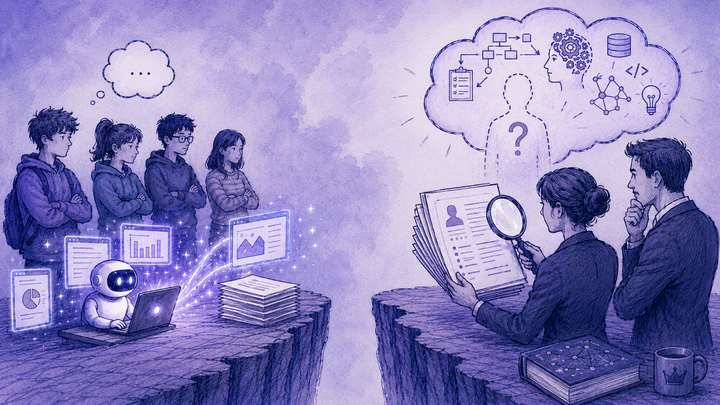
This week’s post centers on three threads: the durability of learning — whether learners’ gains through AI use survive once the tool is removed; assessment as the load-bearing response to that problem; and the redefinition of entry-level work as AI skills become a hiring baseline.
Each aiX Weekly post is organized around a set of recurring sections and pairs with our companion AI and Higher Education timeline, which traces the broader arc of how AI has reshaped higher education since late 2022.
Curated by Claude for the aiX Programs, Columbia University. AI can make mistakes and so is the human reviewer. Please double-check the linked sources.
Reviewed by Tian Zheng on July 29th, 2026.
Scope note: this issue covers developments from roughly July 15–22, 2026, organized around three threads — the durability of learning, assessment as the load-bearing response, and the redefinition of entry-level work. Research Highlights also cites one earlier conceptual reference — a 2024 Nature Perspective — as grounding for this week’s empirical findings.
TL;DR
- Durability of learning: A large study of 26,811 secondary students found AI raised homework scores 18% and cut homework time 30% — then, within six months, monthly exam scores fell 20% and college-entrance scores fell 18–24%, with most of the decline among students who “outsourced” work to AI (Research Highlights)
- The same worry, one level up: A 2024 Nature perspective warns that AI can create “illusions of understanding” and narrow inquiry into “scientific monocultures” — the research-level analogue of “produce more, understand less” (Research Highlights)
- Assessment as the load-bearing wall: An EDUCAUSE report and coverage of unreliable detection tools both point the same way — toward redesigned, process-visible, or in-class assessment rather than surveillance (Research Highlights · What’s in the News)
- Workforce redefinition: Demand for AI skills in entry-level jobs has roughly tripled since fall 2025 even as junior work shifts toward judgment, and Purdue makes an “AI working competency” a graduation requirement this fall (What’s in the News)
Table of Contents
This Week at a Glance
Three threads organize this issue. The first is durability of learning — whether a learner’s gains through using AI survive once the tool is removed: a large secondary-school study finds homework gains reversing into medium-run exam declines, and a Nature perspective raises the same “produce more, understand less” worry at the level of research. The second is assessment as the load-bearing response — if AI-assisted work no longer indexes learning, the unaided, observed task is where a grade recovers its meaning, a shift visible in the EDUCAUSE assessment report and the retreat from detection tools. The third is workforce redefinition — entry-level roles increasingly assume AI skills even as junior work tilts toward judgment, and institutions such as Purdue are writing AI competency into the degree.
Relevant to faculty: The homework-vs-exam gap is a measurement handle — a divergence between AI-assisted and unaided performance is observable, and assignments can be designed to surface it early, definitely before the exams.
Relevant to institutional leaders: The workforce signals — tripling AI-skill demand, competency requirements — raise a curriculum question: where do graduates build judgment if the routine tasks that once developed it are increasingly automated?
Relevant to students and researchers: This week’s strongest study measured learning months later, not at submission — a reminder that immediate performance and durable knowledge can move in opposite directions, whether the work is a homework set or a research paper.
Research Highlights

Faster Completion, Less Learning: Generative AI Reduced Study Time and the Knowledge Students Build (CEPR Discussion Paper 21577; coverage in Fortune, July 21) Researchers from Stockholm University and the University of Hong Kong tracked 26,811 students in grades 7–12 and found that AI adoption raised homework scores by 18% and cut homework completion time by about 30%. Within six months, however, monthly exam scores fell by 20%, and college-entrance-exam performance fell by 18–24%, with the worst results appearing about two years after adoption. The authors attribute roughly 80% of the decline to students who “outsourced” homework — using AI to complete tasks accurately but quickly — rather than to learn from them.
Large-scale panel / quasi-experimental
💬 Editor’s note: This is the mirror image of last week’s proctored experiment: there, students who used AI to understand kept their gains; here, students who used it to finish lost ground months later. The consistent signal across very different designs and populations is that the value shows up in unaided, delayed measurement — which is exactly where most course assessment doesn’t look. The 80%-of-decline-from-“outsourcers” figure is worth confirming in the primary paper before citing. — TZ
Uncovering the Multidimensional Effects of Generative AI on Learning (Sungkyunkwan University; via Phys.org, July) A team at Sungkyunkwan University ran an experiment with 88 university students that split learning into three stages — concept understanding, problem solving, and result review — and randomly assigned AI (GPT-4o) support to different stages. AI help during the problem-solving stage improved test performance relative to AI limited to concept understanding, which the authors attribute to reduced cognitive load; they also flag concerns about dependence when AI is available throughout.
Stage-randomized experiment
💬 Editor’s note: The interesting claim is that where in the learning cycle AI enters may matter as much as whether it’s present — support at problem-solving helped more than at first exposure. That’s a testable design principle. — TZ
The Impact of AI on Learning Assessment (EDUCAUSE, June 2026 report) This EDUCAUSE report surveys how institutions are rethinking assessment as generative AI makes many take-home tasks trivial to complete, documenting movement toward authentic, process-visible, and oral or in-class formats and away from reliance on AI-detection tools. It positions assessment redesign — rather than detection — as the primary institutional response.
Institutional survey/report
💬 Editor’s note: Placed alongside the two studies above, the throughline is that assessment is becoming the load-bearing wall: if AI-assisted homework no longer indexes learning, the unaided, observed task is where a grade recovers its meaning. This is a measurement problem before it is a policy problem. — TZ
Artificial Intelligence and Illusions of Understanding in Scientific Research (Messeri & Crockett, Nature Perspective, March 2024) This 2024 Nature Perspective develops a taxonomy of how scientists envision AI across the research pipeline and argues that its appeal rests on promises to raise productivity and objectivity by compensating for human limits. The authors caution that the same tools can produce “illusions of understanding” — a sense of comprehending more than one actually does — and can foster “scientific monocultures” in which a narrow set of methods, questions, and viewpoints crowds out alternatives, leaving a science that produces more while understanding less.
Perspective / conceptual framework
Editor’s note: Set next to this week’s empirical items, this article is highly relevant today: “produce more but understand less” is the research-level analogue of the homework-vs-exam gap in student learning. — TZ
What’s in the News

Time for Class 2026 Finds Administrators Now Out-Use Students on AI (Tyton Partners, released June 15; coverage this week) | D2L summary Tyton Partners’ Time for Class 2026, subtitled “The AI Tipping Point,” reports that more than half of students, faculty, and administrators now use AI at least weekly, and that administrators use AI daily at a higher rate (43%) than students (32%) — a reversal after years of students leading. Only 22% of faculty consider their institution’s AI policy effective, versus 44% of administrators.
Demand for AI Skills in Entry-Level Jobs Nearly Triples Since Fall 2025 (NACE) NACE reports that the share of entry-level postings requiring AI skills has risen sharply — by some measures roughly tripling since fall 2025 — even as overall class-of-2026 hiring is projected up about 5.6%. Roughly 35% of entry-level roles now reference AI skills, and employers describe junior work shifting toward more analytical and judgment-based tasks and away from routine ones.
💬 Editor’s note: If foundational tasks are thinning while judgment tasks grow, the pipeline question is where new graduates build judgment if the routine reps that used to develop it are automated. That’s a curriculum question as much as a labor-market one. — TZ
Purdue’s “AI Working Competency” Graduation Requirement Goes Live This Fall (Washington Times, July 9) | Purdue newsroom Purdue confirmed that its “AI working competency” graduation requirement takes effect with students entering this fall, part of the broader AI@Purdue strategy spanning learning with AI, learning about AI, research, and operations. It makes a discipline-general AI competency a condition of the degree rather than an elective or a career-services add-on.
💬 Editor’s note: This sits in the workforce-redefinition thread alongside the NACE data above: if entry-level roles increasingly assume AI skills, writing competency into the degree is one institutional answer. The part I’d be very curious to know more about is how “competency” gets assessed. — TZ
Most Discussed

The Atlantic’s “Post-Literate Age” Cover Story A widely-shared Atlantic cover story argues that a shift toward fast, convenient information intake — accelerated by AI — is eroding sustained reading and, with it, the capacity for critical thought. It circulated alongside this week’s homework-vs-exam study as a cultural counterpart to the empirical finding.
💬 Editor’s note: Read as argument rather than evidence, it names the mechanism the CEPR study quantifies: when the effortful part of learning is skipped, the capacity that effort built can erode. The empirical work suggests the outcome tracks how the tool is used, which is a more actionable claim than generational decline. — TZ
“We Have Never Taught Critical Thinking” (Inside Higher Ed, opinion, June 23) This opinion piece, still circulating in faculty discussions, pushes back on the “AI is killing critical thinking” framing by arguing that higher ed has rarely taught critical thinking explicitly in the first place — and that AI is exposing, not causing, a pre-existing gap. It reframes the panic as an opening to be more deliberate about what critical thinking means and how it’s assessed.
💬 Editor’s note: Exposing a pre-existing gap is also an opportunity calling for action. Statistical thinking is a form of critical thinking that could be very valuable to anyone in the age of AI. — TZ
“The Teaching Machine, Again”: Historical Skepticism Resurfaces (via Fortune, July 21) Alongside the homework-vs-exam study, commentators revived a century-old comparison: Pressey’s 1924 and Skinner’s 1950s “teaching machines,” which produced strong performance while students used the device but failed to transfer once it was removed. Neuroscientist Jared Cooney Horvath frames AI as a possible repeat of that “transfer problem” — tools experts use to save effort may teach novices dependency rather than skill.
Try This Week
The Delayed, Unaided Check (20–30 minutes)
Inspired by this week’s studies, where AI-assisted gains faded on later, unaided measures:
- Pick one assignment where students may use AI. Note what a strong submission currently demonstrates.
- Add a brief, unaided follow-up a week later — three minutes of in-class writing, a short oral question, or a quick problem — that asks students to reuse the same idea without AI.
- Compare the two, informally. A large gap between the assisted and unaided work is the signal this week’s research would predict for “outsourced” learning.
- Consider sharing the rationale with students: the follow-up isn’t a trap but a way to confirm the learning transferred — which is the outcome that persists after the tool is gone.
The aim is not to catch AI use but to make durable understanding visible, so both you and the student can see whether it took hold.
aiX Weekly is curated by Claude and reviewed by Tian Zheng for the aiX Faculty Fellowship at Columbia University. Editorial notes reflect one statistician’s reading of the week, offered to prompt discussion rather than to prescribe. Corrections and suggestions welcome.