aiX Faculty Fellowship Program 2026–2027
The aiX Faculty Fellowship Program returns for 2026–2027. This year’s fellowship continues to support faculty in designing curricular innovations on teaching with AI and will focus more on curriculum development on teaching about AI within the context of their own discipline. The call for applications is forthcoming — we aim to open applications in early October 2026.
aiX Faculty Fellowship Program, 2026–2027
- Application opens: early October 2026 (target)
- Fellow selection: mid-October 2026 (target)
- Program kick-off: late October 2026 (target)
- Application materials: forthcoming
- New this year: partnerships with schools and departments, and a build-readiness model for matching projects to support
Table of Contents
About the Program
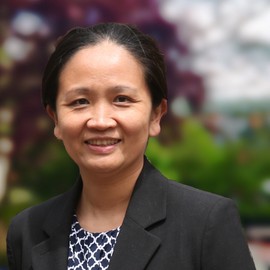
The aiX Faculty Fellowship Program is a faculty-led initiative supported by the Office of the Vice Provost for Faculty Advancement, in continued partnership with the Center for Teaching and Learning. The program is led by aiX lab lead, Professor Tian Zheng.
aiX supports faculty across disciplines — arts, natural and social sciences, engineering, humanities, medicine and health, business, climate, journalism, law, social work, and beyond — in examining what AI means for teaching and learning in their field, and in building something concrete for their own students.
As a cross-disciplinary eXchange, aiX also creates space for fellows to share ideas, learn from one another, and collectively address the opportunities and challenges AI presents within and across disciplines.
New Partnerships with Schools and Departments
New this year, aiX is developing partnerships with individual schools and departments.
With the Department of Statistics, the program is integrated with the “Statistical Consulting and Introduction to Data Science” course. Student consultants in the course will learn how AI is reshaping different disciplines, study and discuss AI education and research case studies, and serve as consultants for fellowship projects that need scoping and initial research.
The aiX lab is also excited to share that Professor Tian Zheng and Professor Rebecca Wexler (an aiX fellow from Spring 2026) have received an Interdisciplinary Teaching Initiative grant from the Provost’s Teaching and Learning Grants Program to develop an AI literacy module for all first-year law students.
This Year’s Focus: Teaching with AI, Teaching about AI
The 2026–2027 fellowship is more sharply focused than previous cycles. Fellows will explore two intertwined questions in the context of their discipline:
- Teaching with AI — how AI tools change what and how we teach, what students practice, and how we assess learning.
- Teaching about AI — treating AI as an object of disciplinary study: how these systems work, what they are made of, and what they do to knowledge, learning, and professional practice in the field.
What Fellows Will Do
- Participate in a kick-off bootcamp on AI literacy and AI education design.
- Design and develop a discipline-specific AI education project — a course module, an assignment sequence, a curricular revision, a learning tool, or another concrete artifact for their students — advancing it through the project lifecycle (see Build Readiness).
- Actively direct and supervise the curricular direction of their project and work closely with student consultants and designers throughout the fellowship.
- Join Zoom consultation hours and/or walk-in studio hours for ongoing design support.
- Contribute to a cross-disciplinary community of practice alongside projects at every stage of development.
- Present outcomes at a public share event at the end of the year.
Build Readiness: Matching Support to Project Stage
Applications will be triaged by “build readiness”: how far along the project idea is. Every project sits somewhere on a lifecycle:
Ideation → Scoping → Research & Design → Development → Evaluation
A promising idea that is still forming needs brainstorming, consultation, and framing; a project ready to be built needs tech talent, compute, and development. aiX will support projects differently depending on where they are, so that resources go where they can actually be used.
| Project stage | What aiX provides |
|---|---|
| Ideation | Kick-off bootcamp; work with consultants to sharpen the question, survey what exists, and develop the idea further. |
| Scoping | Bootcamp and consultation to define scope, learning goals, audience, and success criteria — the step that turns an idea into a buildable project. |
| Research & Design | Student intern support and AI credits, plus design consultation and studio hours. |
| Development | Student intern support and AI credits; hands-on building with the Design Studio. |
| Evaluation | Support for assessing the project with students, and preparation for the public share event. |
What Fellows Receive
All fellows:
- Participation in the kick-off bootcamp on AI literacy and AI education design.
- Zoom consultation hours and walk-in studio hours.
- Membership in the aiX community of practice and the year-end public share event.
Fellows at Research & Design and beyond:
- Support from student consultants and designers, guided by senior aiX Design Studio interns (see The Design Studio below).
- Up to $1,000 in AI credits for developing and testing their project (subject to project scope and allocation limits).
A Community of Practice: “Everyone’s Backyard”
Because projects enter at different stages, the fellowship cohort will always include work at every point in the lifecycle — some fellows still framing a question, others deep in development, others evaluating with students.
This is the “Everyone’s Backyard” model of the aiX lab where we learn from each other and contribute ideas to each other’s projects — across disciplines and across stages.
The Design Studio
This year the aiX program will leverage “Statistical Consulting and Introduction to Data Science,” a course taught by Professor Tian Zheng (course repository). Students enrolled in the course will serve as consultants and designers on fellows’ projects, working with fellows as part of their coursework — with particular strength in supporting projects at the scoping and initial research stages.
In addition, a small number of senior design studio interns with advanced agentic AI skills will be recruited to support project success and to guide the course-based student teams.
Anticipated Timeline
| Target Dates | Key Activities |
|---|---|
| Early October 2026 | Application opens. |
| Mid-October 2026 | Fellow selection and notifications. |
| Late October 2026 | Bootcamp and program kick-off — AI literacy and AI education design. |
| Fall–Spring | Project design and development with student consultants and designers; Zoom consultation hours and walk-in studio hours; community-of-practice sessions. Projects that mature from ideation into design become eligible for intern support. |
| Spring 2027 | Second application cycle (likely). |
| End of program year | Public share event. |
All dates are targets and subject to change.
Application
Application process and materials are forthcoming. Details on eligibility and the application process will be posted here when the call opens in early October.
In the meantime, faculty who are considering applying are welcome to start thinking about:
- A course or curricular context in their discipline where AI raises a real question for them.
- What they would like to learn, build, or redesign during the fellowship year.
- Where the project currently sits on the ideation → scoping → research & design → development → evaluation path.
- How a student consultant or designer could contribute to that work.
Questions
For questions about scope, fit, or logistics, contact tian.zheng@columbia.edu.
For background on the program, see the 2025–2026 fellowship call and the aiX Weekly digest.